









|
Quantity
|
Price
|
||
|
|
|||
|
|
|||
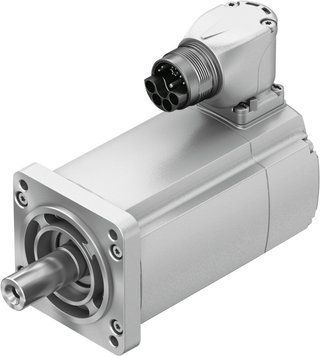
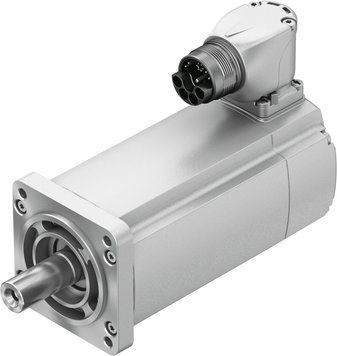
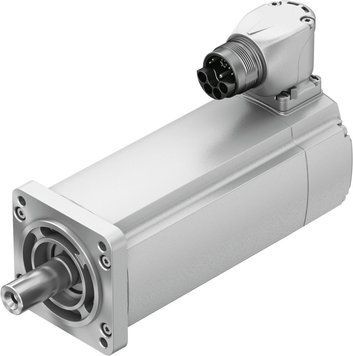
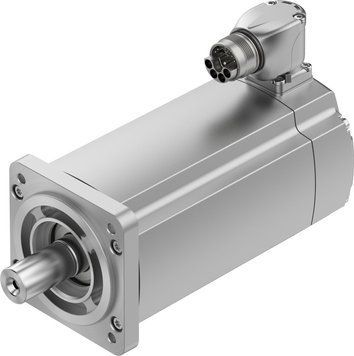
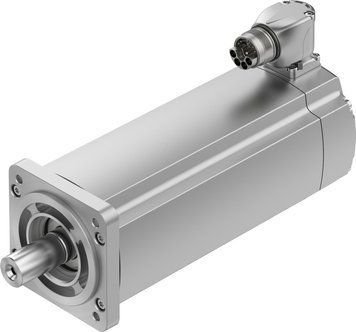
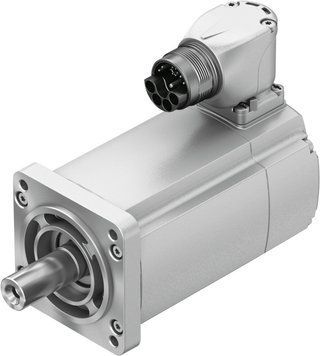
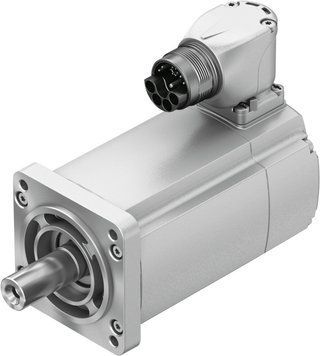
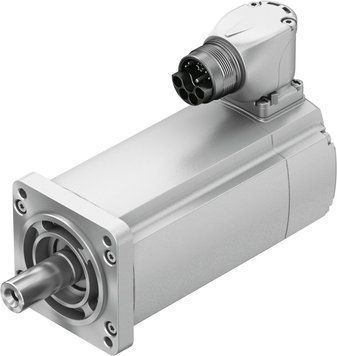
Festo servo motors are used in industrial systems that require precise control of position, speed, and torque. The catalog includes EMMT-AS and EMMB-AS series motors for electromechanical axes, packaging equipment, assembly lines, machine tools, and automated production machinery.
Festo Servo Motor Series
- Festo EMMT-AS — servo motors for dynamic, high-precision applications. Versions are available with different flange sizes, single-turn or multi-turn encoders, and optional holding brakes.
- Festo EMMB-AS — compact servo motors for basic positioning tasks. This series is suitable for small axes, feeding mechanisms, and other assemblies with moderate power requirements.
How to Choose a Festo Servo Motor
Consider rated and peak torque, rotational speed, the inertia of the mechanical system, encoder type, flange size, and whether a holding brake is needed. For vertical axes and mechanisms that must hold a load after power is switched off, a motor with a holding brake is generally selected.
The servo motor should be selected together with a compatible controller. To build a complete system, explore Festo servo drives, servo drive kits, and cables for servo drives and motors. The full range from different manufacturers is available in the servo motors section.
Selection Assistance
For an accurate selection, provide the type of mechanism, load mass, speed and acceleration, gear ratio, duty cycle, and accuracy requirements. An ASFERO engineer can help select the motor, servo drive, and required cables as one compatible system.
FAQ: Festo Servo Motors
What is the difference between EMMT-AS and EMMB-AS?
EMMT-AS motors are designed for more dynamic and demanding motion control applications. EMMB-AS is a compact option for simpler positioning tasks.
Should I choose a single-turn or multi-turn encoder?
A single-turn encoder determines the absolute position within one revolution. A multi-turn encoder also tracks the number of revolutions, which is useful for axes with a long travel range.
When is a holding brake needed?
A holding brake keeps the load in position after power is switched off, especially on vertical axes. It is not intended for routine braking during motor operation.
Can a Festo motor be connected to any servo drive?
No. Compatibility must be checked for voltage, power, current, encoder type, and feedback interface.