





|
Quantity
|
Price
|
||
|
|
|||
|
|
|||
Solutions by Application
Need help choosing?
Tell us about the cylinder type, mounting method and operating conditions. An engineer will help you select suitable reed switch sensors and compatible components for your assembly.
Reed Switch Position Sensors for Pneumatic Cylinders
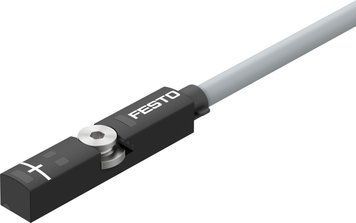
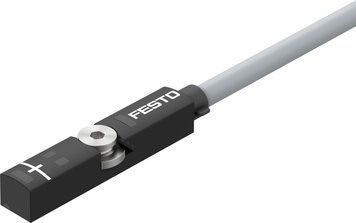
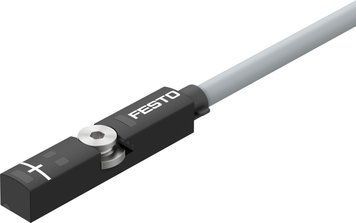
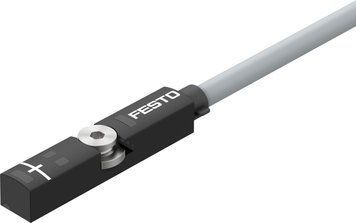
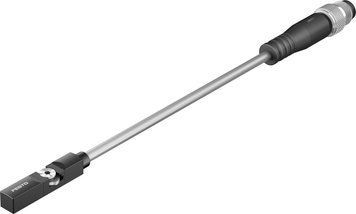
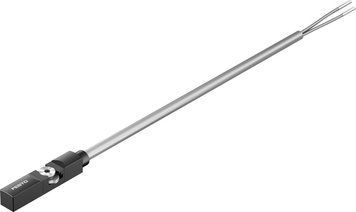
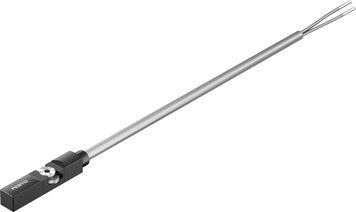
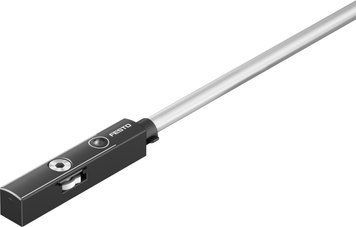
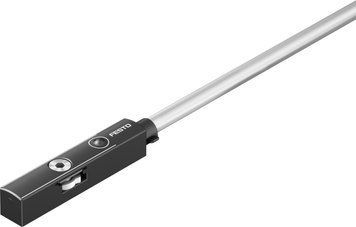
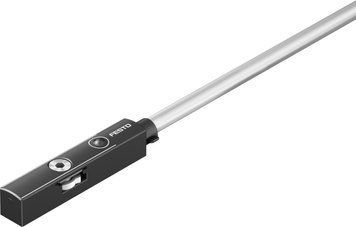
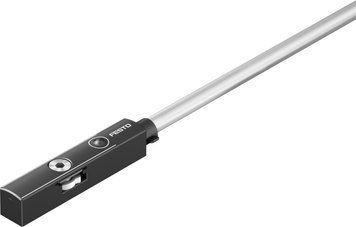
Reed switch sensors provide binary position feedback: the sensor switches when the magnet in a pneumatic cylinder's piston passes its mounting point. This is a simple, reliable way to detect end positions in pneumatic drives, grippers and mechanisms that cycle frequently.
How to Choose a Sensor for Your Cylinder
- Slot and mounting type: T-slot and C-slot are the most common, but round slots are also used. The slot determines the required sensor housing and mounting hardware.
- Switching logic: NO or NC, depending on your control circuit and safety requirements.
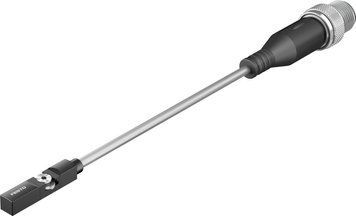
- Power supply and connection: 24 V is common, but check the sensor's rated supply voltage. Choose a cable or connector that suits your installation and maintenance standards.
- Operating conditions: moisture, dust, vibration, temperature and the required IP rating. For demanding environments such as welding areas, chemical exposure or washdown, choose a suitable version.
- Switching point adjustment: consider how easily the sensor can be positioned precisely in the slot and how stable the signal remains under vibration.
Related Categories
For connection and mounting components, explore sensor accessories. Browse all sensors, read Technical Information, or contact us.
Frequently Asked Questions About Pneumatic Cylinder Position Sensors
How do reed switch sensors differ from electronic magnetic sensors?
A reed switch uses a physical contact to provide a binary signal. An electronic magnetic sensor also provides a binary signal but often handles high switching frequencies and vibration better. The right choice depends on the application.
How do I choose between T-slot and C-slot?
Check the design of your pneumatic cylinder. Choose a sensor that fits its slot so it can be secured properly and positioned accurately at the required switching point.
Should I choose NO or NC?
That depends on your control logic and safety requirements. If you are unsure, send us your PLC input wiring diagram and we will help you choose.
Do I need special cables or connectors?
That depends on the sensor version. We can select compatible cables, connectors and mounting accessories.
Can you check compatibility with my PLC or I/O modules?
Yes. We will check the power supply, input type and required signal logic to ensure reliable operation.