



|
Quantity
|
Price
|
||
|
|
|||
|
|
|||
Solutions by Application
Need help choosing?
Describe the motor type, motion requirements, and system architecture — an engineer will help you select a suitable motor controller and compatible components for your machine.
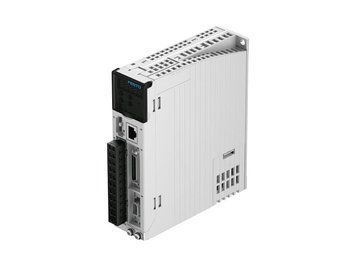
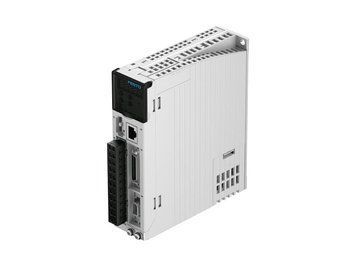
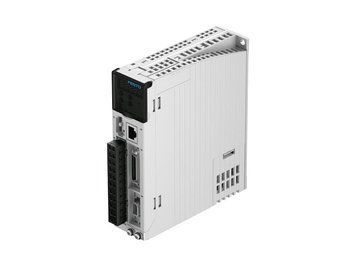
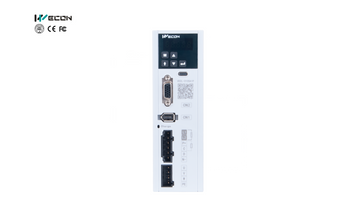
Motor Controllers: Motion Control and System Compatibility
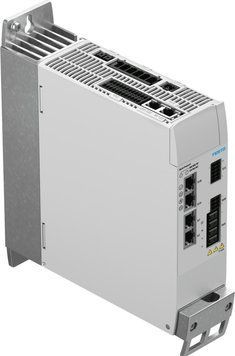
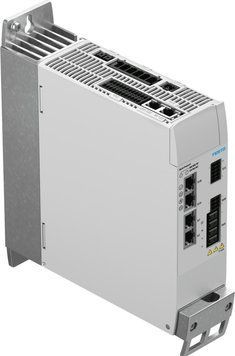
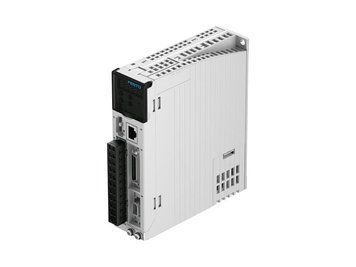
A motor controller/drive is the “brain” of a drive system. It controls speed, torque, and position (depending on the system type) and coordinates the motor with a PLC or motion controller. A correctly selected controller provides stable operation, protection, diagnostics, and repeatable motion — particularly in servo systems and high-dynamic applications.
How to Choose a Controller for Your Application
- System type: Servo or stepper. For servo systems, compatibility with the encoder and motor specifications is essential; for stepper systems, consider current, microstepping, and control modes.
- Power supply: 1~230 V or 3~400 V for servo systems, or often 24 V/48 V for stepper systems, depending on the design and power requirements.
- Power and current: The controller should handle normal operating conditions and peak loads with an adequate margin.
- Control interfaces: Consider integration with the PLC or motion controller, required signals and protocols, and axis synchronization requirements.
- Components: Power and signal cables, encoder cable, connectors, and mounting hardware must all be compatible.
Typical Applications
- Axis positioning for belt-driven or screw-driven axes and electric cylinders.
- Speed and torque control in machine assemblies.
- Motion synchronization along a production line and integration with a PLC.
- Diagnostics and protection: overload, overheating, and fault conditions.
Related Categories
Motors: servo motors and stepper motors. Kits: drive kits. Cables: motor cables. If you need assistance, visit our contact page.
Frequently Asked Questions About Motor Controllers
How do I choose a controller for a motor?
Check the motor type (servo or stepper), power supply, current and power ratings, control interfaces, and encoder compatibility (for servo motors).
Which should I choose: 1~230 V or 3~400 V?
It depends on the available power supply and required power rating. More powerful servo systems often use 3~400 V.
Can you select a controller for my PLC?
Yes. Tell us the PLC model, interfaces, and control requirements, and we can select a compatible solution.
Are separate motor and encoder cables needed?
Often, yes. We can select power and signal cables for the specific motor and controller combination.
Can I get a quotation and invoice?
Yes. Send us a list of products or your technical specifications, and we will prepare a quotation and invoice.