








|
Quantity
|
Price
|
||
|
|
|||
|
|
|||
Solutions by Application
Need help choosing?
Describe the type of movement, load, step size, speed, and control requirements — an engineer will help you select a suitable stepper motor and compatible components for your application.
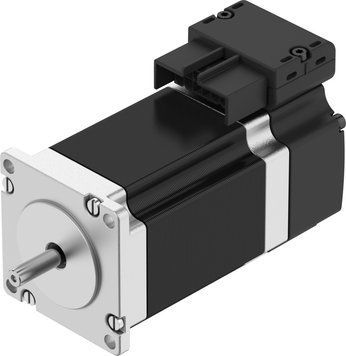
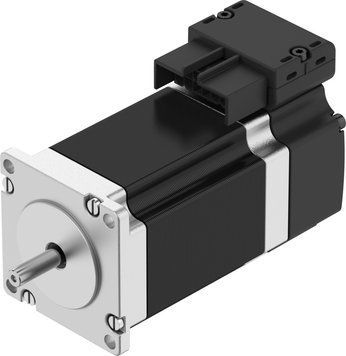
Stepper Motors for Precise Positioning
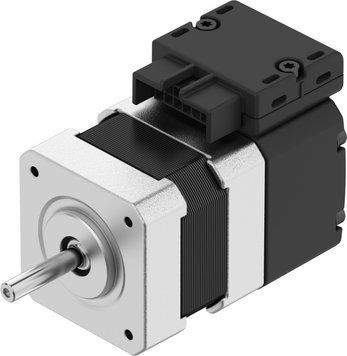
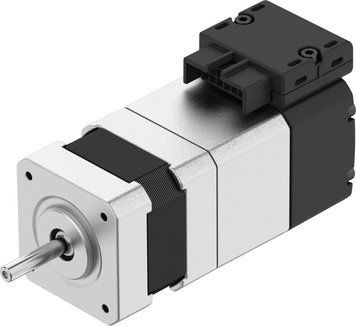
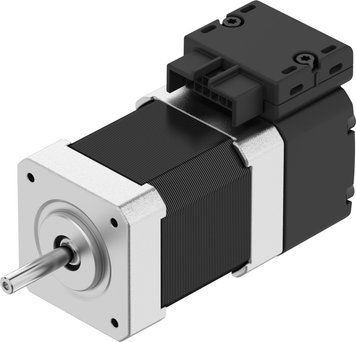
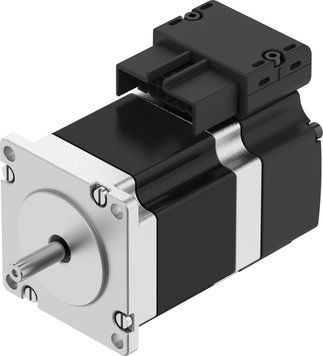
Stepper motors are used for positioning applications where simplicity, repeatability, and predictable motion are important. They are suitable for feeding, dosing, axis movement, light-duty manipulators, and test benches. Proper selection means matching the torque, operating conditions, and control system (driver/controller) so the motor runs reliably without losing steps.
How to Choose a Stepper Motor
- Torque and safety margin: Assess the load and acceleration, and allow extra torque for peak loads and mechanical friction.
- Flange and dimensions: Match the available mounting space (often using the NEMA frame size or product series as a guide).
- Current and voltage: Match the motor, driver, and power supply (often 24 V or 48 V), taking operating conditions and heating into account.
- Driver/controller: Consider microstepping, control modes, current limits, and compatibility with your PLC or motion controller.
- Options: A holding brake, an encoder for closed-loop feedback, and a version suited to the operating environment.
What Affects Reliable Operation
Key factors include an adequate torque margin, correct driver settings, mechanical stiffness, and system inertia. If high dynamic performance or real-time position monitoring is required, a servo system may be worth considering. For comparison, see servo drives.
Related Categories
Controllers and drivers: motor controllers. Kits: drive kits (if you prefer a preselected combination). For mechanical components, see electromechanics. If you need assistance, visit our contact page.
Frequently Asked Questions About Stepper Motors
How can I prevent missed steps under load?
Allow enough torque margin, set the driver correctly (current and microstepping), use appropriate acceleration, and make sure the mechanism is rigid with minimal backlash.
Which matters more when choosing a motor: torque or current?
Torque determines the motor's ability to move the load, while current affects driver requirements and heating. Select the motor, driver, and power supply together.
When do I need an encoder or closed-loop control?
When position verification matters, peak loads are expected, or you need greater reliability against missed steps.
Which is better: 24 V or 48 V?
It depends on the system and driver. A higher supply voltage often improves performance at higher speeds, but compatibility and operating conditions determine the right choice.
Can you help select a driver/controller?
Yes. We can select a compatible driver/controller and power supply for your motor and application.