
|
Quantity
|
Price
|
||
|
|
|||
|
|
|||
Solutions by Application
Industry Solutions
Need help choosing?
Describe the equipment, power requirements, and connected components — an engineer will help you select a suitable power supply for your automation system.
Motor Power Supplies: Reliable Operation of Drives and Controllers
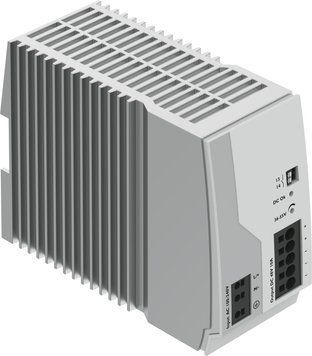
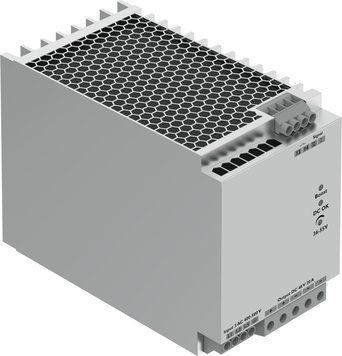
A stable power supply is essential for reliable drive operation. Motor power supplies (most commonly 24 V or 48 V) are used in systems with stepper motors, controllers, sensors, and auxiliary automation equipment. Selecting the right current and power ratings reduces the risk of voltage dips, controller faults, and overheating.
How to Choose a Power Supply
- Voltage: Determine it from the requirements of the controller/drive and connected loads (often 24 V or 48 V).
- Current and power: Calculate the total demand of all connected loads and allow a margin for peak operating conditions.
- Operating conditions: Dynamic drive loads can cause current peaks, which must be considered when selecting the supply.
- Mounting: Consider the mounting method (often DIN rail), dimensions, ventilation, and control cabinet conditions.
- Protection: Look for overload, overtemperature, and short-circuit protection, stable output, and low ripple if required.
Practical Tips
- Allowing power headroom generally helps improve stability and service life.
- Separate loads such as drives, control electronics, and sensors in complex systems to simplify diagnostics and reduce unwanted interactions.
- Check compatibility with the controller/drive and its voltage and current requirements.
Related Categories
For system selection: motor controllers, stepper motors, servo motors, and motor cables. If you need assistance, visit our contact page.
Frequently Asked Questions About Motor Power Supplies
Which voltage should I choose: 24 V or 48 V?
Follow the voltage requirements of the driver/controller and connected loads. In some stepper systems, 48 V can improve dynamic performance, but compatibility is the deciding factor.
How much current and power margin do I need?
Allow a margin above the total demand, taking peak operating conditions and possible future expansion into account.
Can one power supply feed both motors and sensors or control electronics?
Sometimes, yes. In complex systems, separating the loads helps reduce interference between them and makes troubleshooting easier.
Why do output ripple and voltage stability matter?
They can affect the operation of controllers and sensitive components. For demanding systems, we can select a supply with suitable output characteristics.
Can you select a power supply for my driver/controller?
Yes. Tell us the driver/controller model, voltage, and total load, and we can select a suitable power supply.